

1. Carlo Gesualdo: A Noble Composer Who Broke the Grammar of His Time
When discussing Carlo Gesualdo (1566~1613), his tragic life cannot be avoided as a point of departure. A Neapolitan nobleman, he is recorded in history for the 1590 murder of his wife, Maria d’Avalos, and her lover, Fabrizio Carafa. Even by the standards of his own time, the crime was deeply shocking, leaving an indelible mark on his life and reputation.
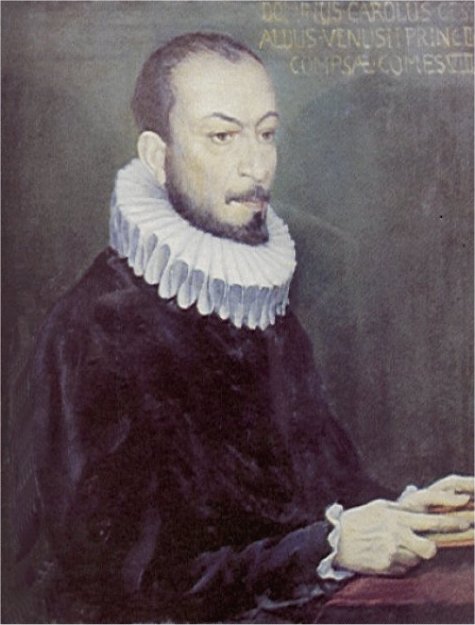
Image source: Portrait of Carlo Gesualdo – 16th century, Italy, painting by an unknown artist. Courtesy of Wikimedia Commons. Public Domain.
However, the purpose of this article is not to sensationalize or justify that crime. Rather, it is to examine how the extreme isolation and moral rupture he experienced became a technical force capable of dismantling the rigid musical norms of his period.
2. The Norms of the Renaissance Madrigal and Gesualdo’s Deviation
In late sixteenth-century Italy, the madrigal was a music of order. Multiple voices were expected to maintain a balanced polyphony, and even when the text expressed pain or despair, harmony was generally required to resolve within accepted rules. Dissonance functioned only as a temporary ornament, a means of reaching consonance. Musical rules always took precedence over textual expression.
Claudio Monteverdi challenged this convention by advocating seconda pratica, the idea that musical rules could be bent in service of the text’s emotional meaning. He employed dissonance boldly and applied existing rules flexibly. Yet in Monteverdi’s music, a sense of direction remains intact. Rules may loosen temporarily, but the music ultimately moves toward order and cadence.
Gesualdo’s madrigals differ sharply at this point. In his music, dissonance no longer functions as a passing stage. Rather than slightly bending the rules for expressive effect, he removes the very necessity of returning to consonance. The music shows little intention of restoring a “normal” state, and this choice does not extend existing rules so much as undermine the assumptions that allow those rules to function at all.
For this reason, Gesualdo stands as an extreme outlier even within the context of seconda pratica. His madrigals do not sound like variations within Renaissance norms, but like music that begins from the premise that those norms no longer apply. This becomes most explicit in Moro, lasso, al mio duolo.
3. Moro, lasso, al mio duolo: A Harmonic Design Four Centuries Ahead
Position and context of the work
Moro, lasso, al mio duolo, included in the Sixth Book of Madrigals (1611), represents the culmination of Gesualdo’s late style. The piece pays little regard to the foundational principles of its time—balanced contrapuntal voice-leading or stable harmonic closure—and stands as one of the most radical departures from the sound world Renaissance music had sustained for generations.
Harmonic rupture and loss of direction: a comparison with Wagner
Although composed before the major–minor tonal system had fully taken shape, the piece begins with a C♯ chord and immediately moves to an A minor chord—a progression difficult to explain even within contemporary modal thinking. Between these two harmonies there is little indication of a central pitch or any movement toward cadence. From the outset, the music refuses to say where it is going.
This rupture feels more radical than the “deferred resolution” found in the Prelude to Wagner’s Tristan und Isolde. Wagner’s chromaticism accumulates tension while still orienting itself toward eventual resolution. Gesualdo, by contrast, cuts the logical link between chords altogether. As a result, this music does not postpone resolution; it is constructed as a state in which resolution is never assumed to exist.
Text and harmony in direct correspondence
The relationship between text and harmony is strikingly literal. The line “E chi può dar mi vita” (“And who can give me life”) appears in a relatively familiar and stable harmonic area associated with C major. When the text turns to “Ahi, che m’ancide” (“Ah, who kills me”), the harmony collapses immediately into an unstable chromatic state.
Gesualdo reverses harmonic stability at every semantic turning point of the text, translating its internal contradiction directly into musical structure. This is not emotional excess, but a carefully calculated compositional strategy aligned precisely with shifts in meaning.
Carlo Gesualdo uses sudden harmonic shifts and unresolved dissonances not as decoration, but as the core structure of the music.
4. An Isolated Workshop and Destructive Creativity
The background to such radical harmonic construction lies in Gesualdo’s social isolation after the murders. Cut off from external scrutiny and musical convention, he created what amounted to a private experimental laboratory.
Here, his destructiveness functions as a double-edged sword. Psychological instability born of ethical transgression may have paradoxically fueled artistic transgression. The dangerous freedom available only to someone expelled from social norms allowed Gesualdo to embed modern dissonance within the rigid framework of Renaissance polyphony.
5. Reassessment by Stravinsky and Modern Significance
Forgotten for centuries, this strange music resurfaced in 1960, when Igor Stravinsky premiered Monumentum pro Gesualdo to commemorate the composer’s 400th birthday. What astonished modern musicians was not simply the antiquity of the music, but the fact that a sixteenth-century score already contained sounds uncannily close to twentieth-century musical sensibilities.
If Wagner’s chromaticism works by accumulating tension on the way to resolution, Gesualdo’s chromaticism works by breaking that trajectory entirely. Wagner delays resolution; Gesualdo writes music that never presumes resolution in the first place.
For this reason, Gesualdo’s music belongs chronologically to the past while sounding, perceptually, closer to post–twentieth-century music. He is called “ahead of his time” not because he proposed a new theory, but because he realized sounds that contemporary listeners were not yet prepared to hear.
6. Beyond Fiction: The Raw Reality of Carlo Gesualdo’s Tragedy
The chaconne in The Red Violin or the background music of Hannibal, discussed in earlier essays, are fictional devices meticulously crafted for dramatic effect. Gesualdo’s music, by contrast, presents the raw reality of extreme human tragedy toward which such fictional imagination ultimately gravitates.
Where film music imitates tragedy through musical form to draw the audience in, Gesualdo embeds his own existential collapse within the refined structure of the madrigal itself. It is precisely here that one may suspect works like Hannibal of drawing inspiration from Gesualdo’s life and music. Fiction simulates anxiety through imagination; Gesualdo fixes that anxiety into musical reality.
In the end, all of these works converge on a single fundamental question: when the most destructive moments of human experience are transformed into precise artistic designs, what do they reveal? Gesualdo’s dissonance is not an aestheticization of crime, but a stark demonstration of how uncompromisingly honest art can be when it crosses the limits of moral comfort.
Further Reading
The Red Violin(1998) | A 300-Year Musical Journey Through Classical Music History
The Red Violin(1998) | A 300-Year Musical Journey Through Classical Music History
Vide Cor Meum | Dante’s Rose Blooming in a Cannibal’s Heart