
Women Behind the Score Series
1. Mel Bonis (1858–1937) | A Forgotten French Female Composer and the Music Hidden Behind a Name
2. Mel Bonis and Fauré | A 50-Year Musical Friendship Born in Room 7 of the Paris Conservatoire
3. Cécile Chaminade (1857–1944) & Augusta Holmès (1847–1903) | Two Forgotten Voices of Paris
4. Johanna Müller-Hermann (1868–1941) & Dora Pejačević (1885–1923) | Two Forgotten Voices of Vienna
5. Ethel Smyth (1858–1944) & Amy Beach (1867–1944) | Two Forgotten Voices of Britain and America
In our last piece, we left Vienna behind. Nazism had erased an entire generation at once, and a world war cut one brilliant life short at thirty-seven. Now we cross the Atlantic — to Britain and America. But the way these two women were forgotten is different again. What erased Müller-Hermann was Nazism. What erased Pejačević was an early death. What erased Ethel Smyth (1858–1944) and Amy Beach (1867–1944) was something far more ordinary. Smyth was remembered not as a composer but as a suffragette. Beach was not remembered as a composer but lived as a surgeon’s wife. Both women kept their names. But the labels attached to those names buried the music beneath them.
1. Ethel Smyth — The Composer Hidden Behind the Label “Suffragette”
Ethel Smyth (Dame Ethel Mary Smyth, 1858–1944)
“An opera composer and suffragette — a British composer whose two identities obscured each other”
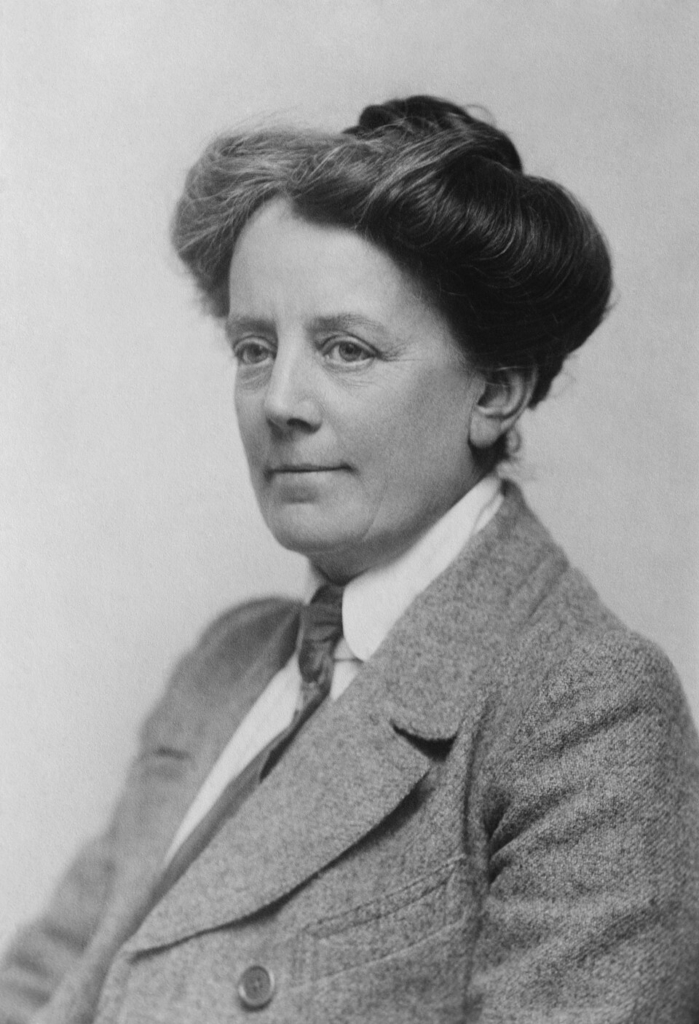
Image source: Portrait photograph of Ethel Smyth — taken on 31 January 1922. George Grantham Bain Collection; restored by Adam Cuerden. Held by the Library of Congress, Prints and Photographs Division. Wikimedia Commons. Public domain.
Nationality: British
Active: Late 19th–early 20th century, Britain · Germany · Europe
Primary genres: Opera, choral symphony, orchestral works, chamber music
Characteristics: German Romantic foundation, English lyrical sensibility, dramatic compositional force, intersection of suffrage activism and music
The Leipzig Rebellion — A Woman Who Broke Down the Door
Ethel Smyth was born in London in 1858, the daughter of a general in the Royal Artillery. Like Mel Bonis, she ran headlong into her father’s fierce opposition. Like Mel Bonis, she broke through it in the end. But her method was her own. Smyth locked herself in her room and refused to attend any social engagements whatsoever, wearing her father down through sheer refusal. After years of arguments and self-imposed isolation, nineteen-year-old Smyth entered the Leipzig Conservatory in 1877. There she encountered Brahms, Dvořák, and Tchaikovsky, building the foundations of her identity as a composer.
Back in England, she turned her full attention to opera. In 1903, her opera Der Wald was premiered at the Metropolitan Opera in New York. It was the first work by a female composer ever staged at the Met — a record that would stand unbroken for 113 years, until 2016. Her masterpiece, The Wreckers, remains one of the important works in the British operatic repertoire to this day.
The Woman Who Conducted from a Prison Window with a Toothbrush
In 1910, Smyth joined the Women’s Social and Political Union and set music aside entirely for two years to devote herself to the cause. In 1911, she composed The March of the Women — which became the official anthem of the suffragette movement. In 1912, she took part in a window-smashing demonstration against opponents of women’s suffrage and was sent to Holloway Prison. It was there that the famous image was born. While imprisoned suffragettes marched in the prison courtyard singing The March of the Women, Smyth leaned out of an upper window and conducted them with a toothbrush.
The problem was that this image was too powerful. From that point on, Smyth’s name was linked to the suffrage movement before it was linked to her music. Her controversial memoirs further drew public attention away from the substance of her compositions. Despite losing her hearing in old age, she kept composing, and in 1922 she became the first female composer to be granted a damehood. But by that point, she had already been pushed to the margins of musical life.
2. Amy Beach — The Symphony Written Inside the Constraints of Marriage
Amy Beach (Amy Marcy Cheney Beach, 1867–1944)
“A composer who wrote America’s first female symphony from within the confines of marriage”
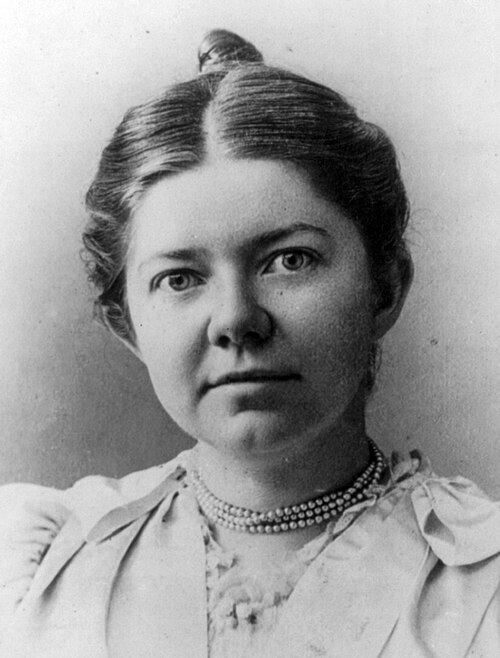
Image source: Portrait photograph of Amy Beach — date unrecorded. George Grantham Bain Collection, Library of Congress, Prints and Photographs Division. Wikimedia Commons. Public domain (United States).
Nationality: American
Active: Late 19th–early 20th century, Boston · New York · Europe
Primary genres: Symphony, piano concerto, chamber music, art songs
Characteristics: Late Romantic foundation, integration of American folk melody, compositional technique built entirely through self-study
A Child Prodigy Who Was Never Sent to Europe
Amy Beach was born in New Hampshire in 1867. She had memorized forty lullabies by the age of one, and by four she was playing four-part hymns on the piano and adding waltz melodies of her own invention. She was a prodigy by any measure — but in America at the time, a woman who wanted a serious compositional education needed European training. That opportunity was never offered to her.
Instead, Beach chose self-study. She tracked down every book she could find on harmony, counterpoint, and fugue, and translated Berlioz’s and Gevaert’s French treatises on orchestration into English for herself. The fruit of that self-education was her Gaelic Symphony of 1896. Premiered by the Boston Symphony Orchestra, it was the first symphony composed and published by an American woman.
The Composer Who Signed a Marriage Contract
In 1885, eighteen-year-old Beach married Henry H. A. Beach, a Boston surgeon twenty-five years her senior. The marriage came with conditions. Public performances were limited to twice a year, with the proceeds donated to charity. Private teaching was forbidden. Beach agreed to these terms. And within those constraints, she wrote more than 300 works.
When her husband died in 1910, Beach was free for the first time to pursue her musical life without restriction. She traveled to Europe, performing her symphony and piano concerto in Germany and Austria to enthusiastic reviews. When World War I broke out in 1914, she returned to America and devoted much of her energy to supporting women composers. In 1925, she became a founding member and first president of the Society of American Women Composers.
3. Two Labels, One Silence
Smyth and Beach lived entirely different lives on opposite sides of the Atlantic. Smyth fought. She fought her father, she fought the musical establishment, and she fought the government. Beach endured. She accepted the constraints of her marriage and did everything she could within them. Two different strategies — and yet the outcome was much the same.
Smyth’s name came attached to the label “suffragette.” Beach’s name came attached to “Mrs. H. H. A. Beach” — her husband’s name. In both cases, the label was heard before the music was. Where Mel Bonis hid behind the mask of “Mel,” Smyth and Beach were buried beneath their own modifiers.
Conclusion: The Music Behind the Labels Is Coming Forward at Last
Smyth’s operas began returning to the stage from the 2010s onward. In 2021, her final work, The Prison, won the Grammy Award for Best Classical Vocal Solo. Beach’s Gaelic Symphony has become a work that American orchestras programme regularly. Both names are finding their way back.
What erased Mel Bonis was her family. What erased Chaminade was a label. What erased Holmès was a pseudonym. What erased Müller-Hermann and Pejačević was history. And what erased Smyth and Beach was a modifier — a word or a name that arrived before the music and stayed longer. The methods were different. The silence was always the same.
This brings the regional series within the Women Behind the Score project to a close. Five installments. Eight women. Paris, Vienna, London, Boston. Their music went unheard for a long time. But now, across the same stretch of time, it is sounding again.
Further Reading – Women Behind the Score Series
Mel Bonis (1858–1937) | A Forgotten French Female Composer and the Music Hidden Behind a Name
Mel Bonis (1858–1937) | A Forgotten French Female Composer and the Music Hidden Behind a Name
Mel Bonis and Fauré | A 50-Year Musical Friendship Born in Room 7 of the Paris Conservatoire
Mel Bonis and Fauré | A 50-Year Musical Friendship Born in Room 7 of the Paris Conservatoire
Cécile Chaminade (1857–1944) & Augusta Holmès (1847–1903) | Two Forgotten Voices of Paris
Cécile Chaminade (1857–1944) & Augusta Holmès (1847–1903) | Two Forgotten Voices of Paris
Johanna Müller-Hermann (1868–1941) & Dora Pejačević (1885–1923) | Two Forgotten Voices of Vienna
Johanna Müller-Hermann (1868–1941) & Dora Pejačević (1885–1923) | Two Forgotten Voices of Vienna