Early Romantic Music period — salon concert in 19th century Europe
Western Music History ⑥ Early Romantic Music (1820s–1850s) | When Emotion Became the Language of Music
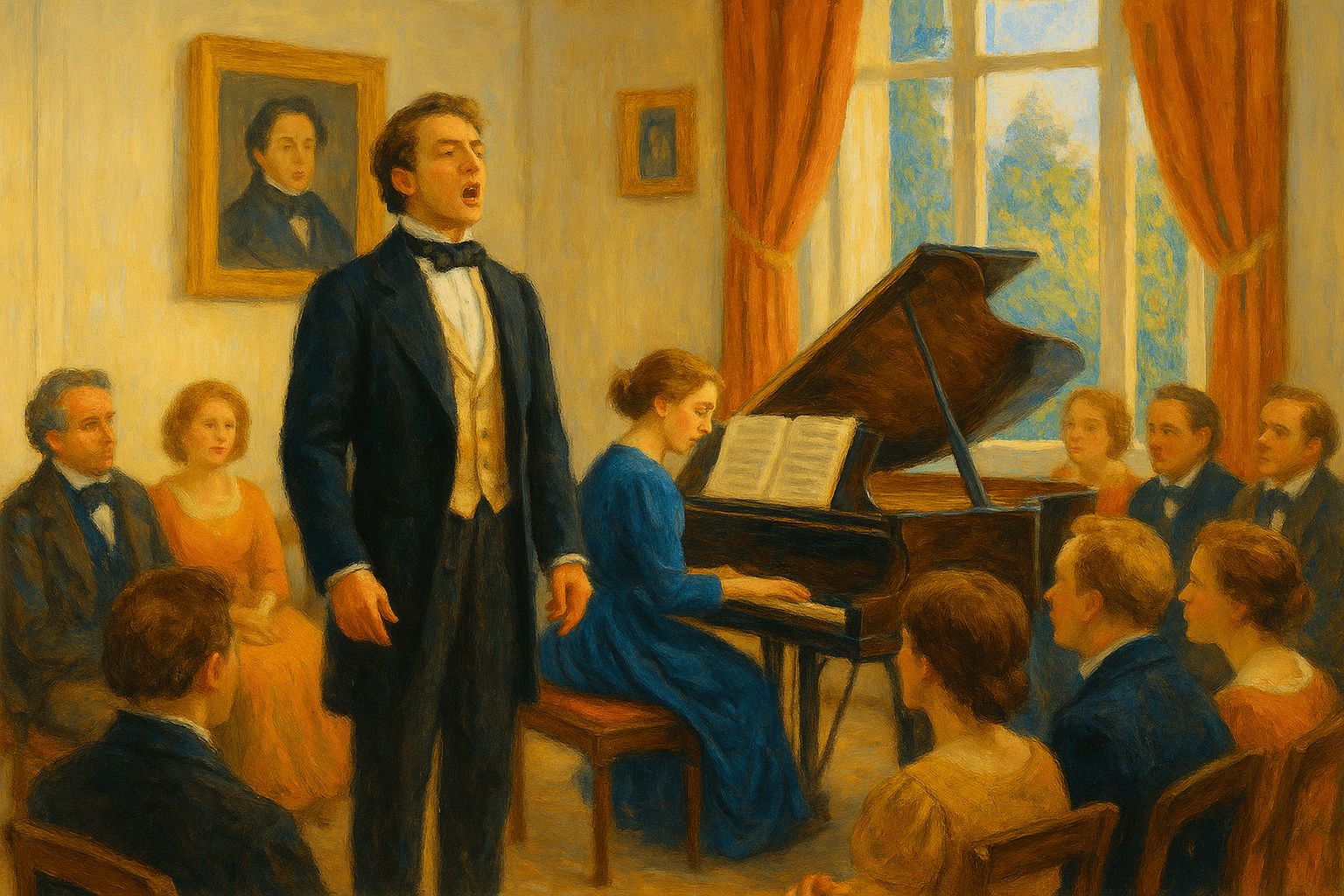
Early Romantic Music period — salon concert in 19th century Europe

The Early Romantic period built upon the order and formal structures that Classicism had refined — and within that framework, composers began to express personal emotion and imagination with a new kind of freedom. As the Industrial Revolution expanded the urban middle class, music moved beyond the courts and churches into public concert halls, private … Read more
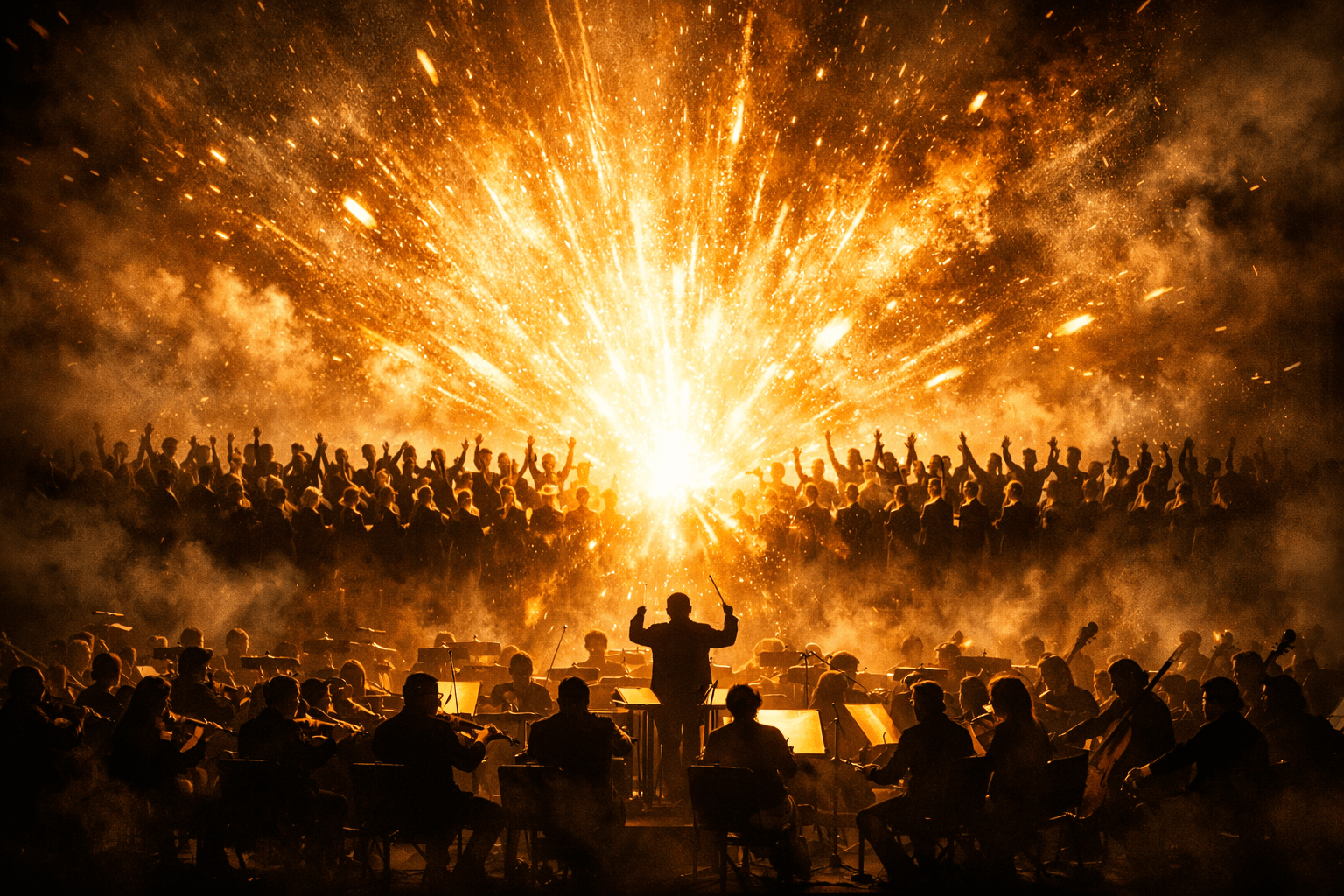
An orchestra and choir performing Beethoven Symphony No. 9 with a dramatic explosion of golden light symbolizing the Ode to Joy.
Beethoven Symphony No.9 and the 1824 Premiere | The Night He Could Not Hear the Applause

An orchestra and choir performing Beethoven Symphony No. 9 with a dramatic explosion of golden light symbolizing the Ode to Joy.

1. May 7, 1824 — Vienna On the evening of May 7, 1824, the Kärntnertortheater in Vienna was packed to capacity. The audience had come for the premiere of Beethoven Symphony No.9 — his first major orchestral work in over a decade. When the final movement ended, the hall erupted in applause. But Beethoven, standing … Read more

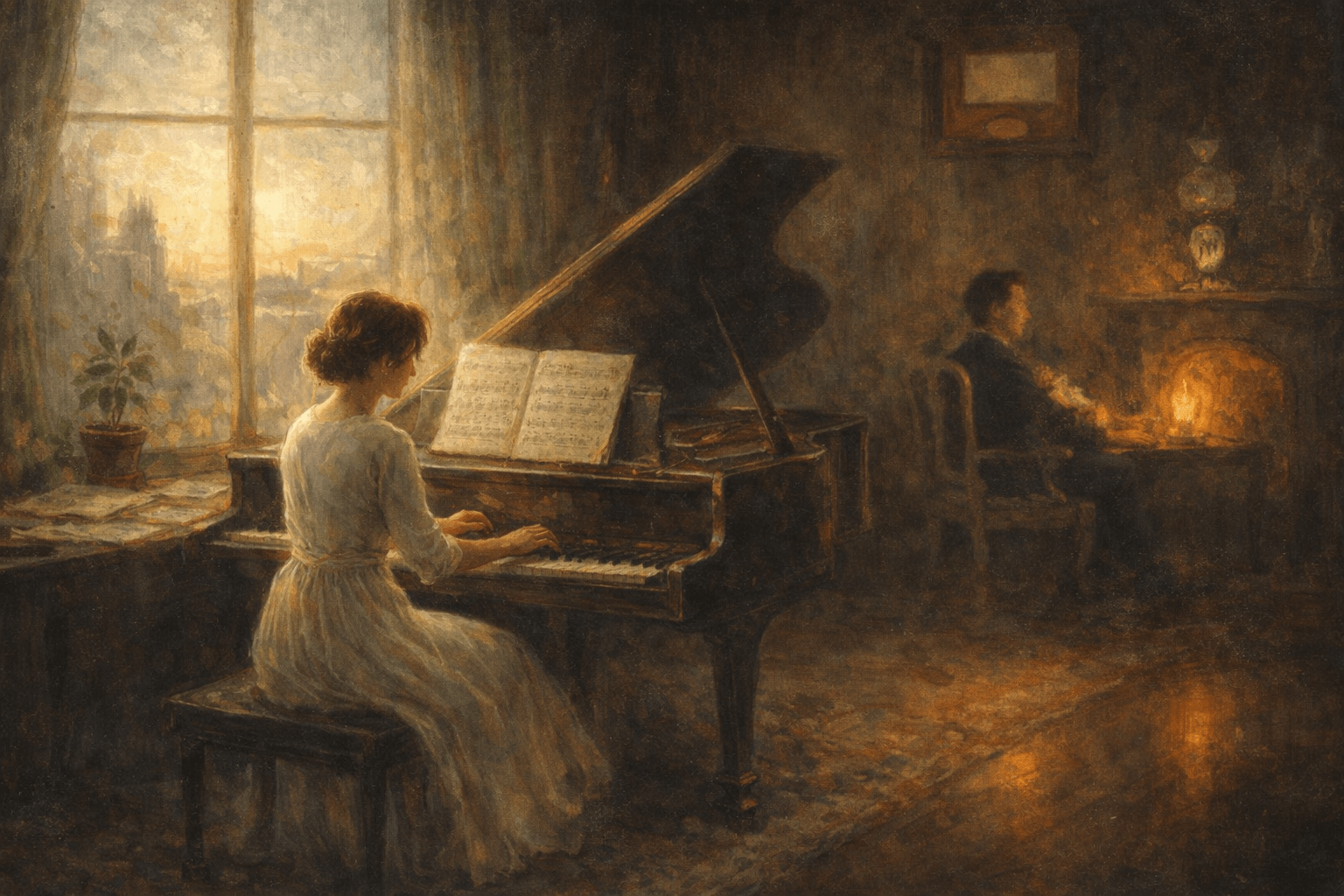
Ethel Smyth and Amy Beach represented as a woman playing piano in a quiet 19th-century interior, symbolizing the hidden lives of female composers
Ethel Smyth (1858–1944) & Amy Beach (1867–1944) | Two Forgotten Voices of Britain and America

Ethel Smyth and Amy Beach represented as a woman playing piano in a quiet 19th-century interior, symbolizing the hidden lives of female composers

Women Behind the Score Series 1. Mel Bonis (1858–1937) | A Forgotten French Female Composer and the Music Hidden Behind a Name 2. Mel Bonis and Fauré | A 50-Year Musical Friendship Born in Room 7 of the Paris Conservatoire 3. Cécile Chaminade (1857–1944) & Augusta Holmès (1847–1903) | Two Forgotten Voices of Paris 4. … Read more

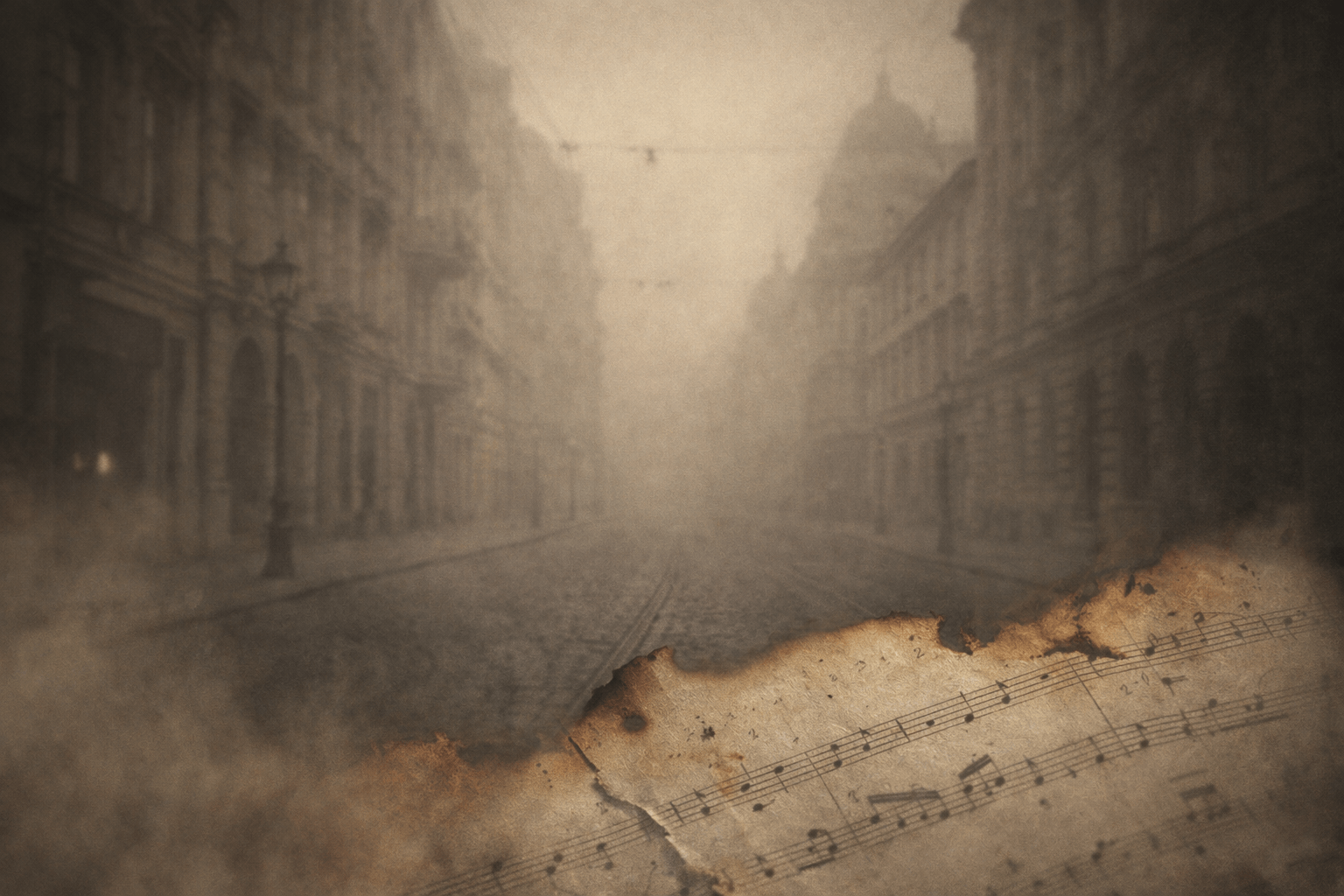
A foggy Vienna street with a torn and burned sheet of music overlaid at the bottom, representing how war erased the legacies of Johanna Müller-Hermann and Dora Pejačević
Johanna Müller-Hermann (1868–1941) & Dora Pejačević (1885–1923) | Two Forgotten Voices of Vienna

A foggy Vienna street with a torn and burned sheet of music overlaid at the bottom, representing how war erased the legacies of Johanna Müller-Hermann and Dora Pejačević

Women Behind the Score Series 1. Mel Bonis (1858–1937) | A Forgotten French Female Composer and the Music Hidden Behind a Name 2. Mel Bonis and Fauré | A 50-Year Musical Friendship Born in Room 7 of the Paris Conservatoire 3. Cécile Chaminade (1857–1944) & Augusta Holmès (1847–1903) | Two Forgotten Voices of Paris 4. … Read more

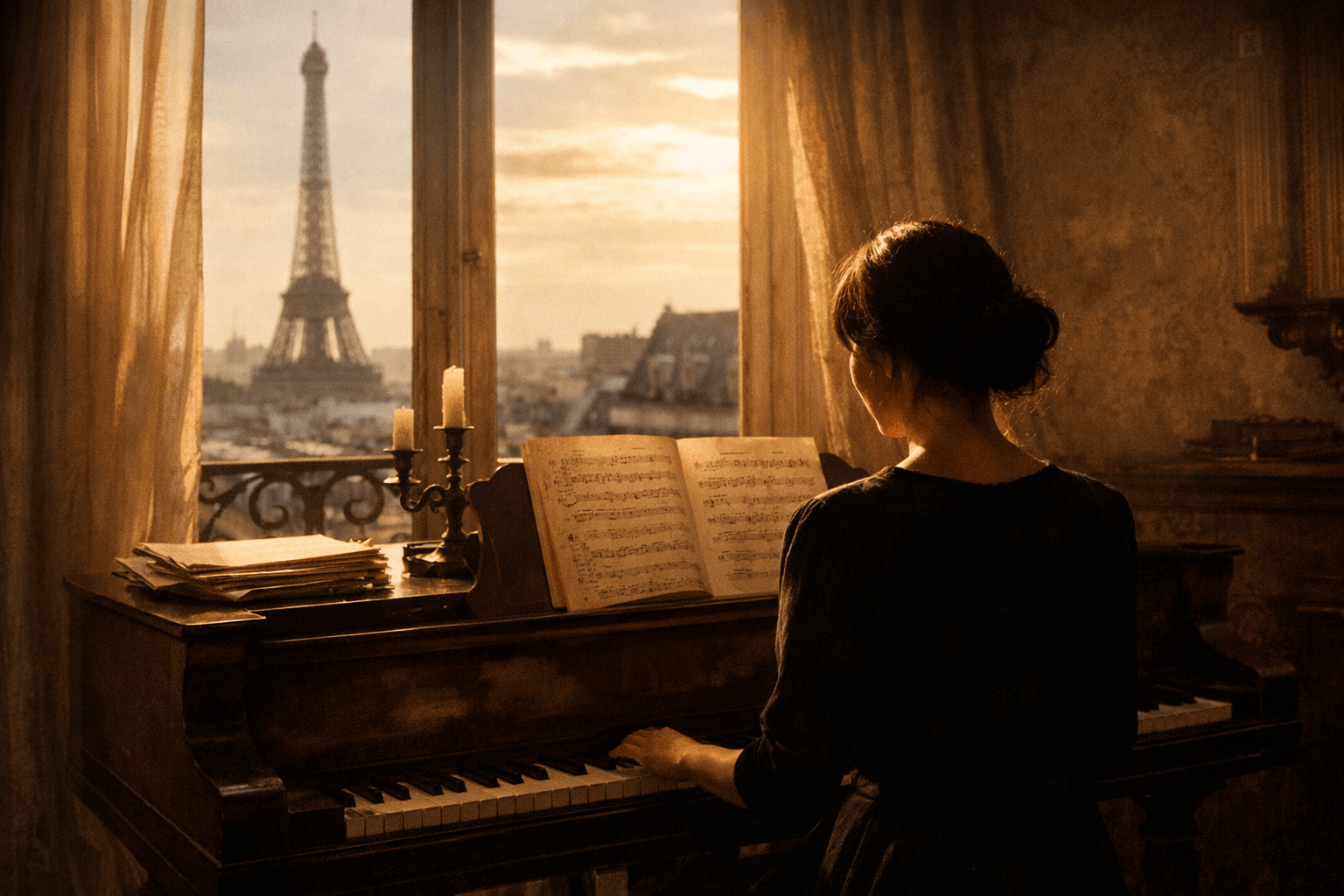
Cécile Chaminade and Augusta Holmès inspired scene of a woman playing piano by a Paris window with the Eiffel Tower in the background, symbolizing forgotten female composers
Cécile Chaminade (1857–1944) & Augusta Holmès (1847–1903) | Two Forgotten Voices of Paris

Cécile Chaminade and Augusta Holmès inspired scene of a woman playing piano by a Paris window with the Eiffel Tower in the background, symbolizing forgotten female composers

Women Behind the Score Series 1. Mel Bonis (1858–1937) | A Forgotten French Female Composer and the Music Hidden Behind a Name 2. Mel Bonis and Fauré | A 50-Year Musical Friendship Born in Room 7 of the Paris Conservatoire 3. Cécile Chaminade (1857–1944) & Augusta Holmès (1847–1903) | Two Forgotten Voices of Paris   … Read more

Portraits of Mel Bonis and Fauré, two French composers whose musical friendship began in Room 7 of the Paris Conservatoire in 1877.
Mel Bonis and Fauré | A 50-Year Musical Friendship Born in Room 7 of the Paris Conservatoire

Portraits of Mel Bonis and Fauré, two French composers whose musical friendship began in Room 7 of the Paris Conservatoire in 1877.

Women Behind the Score Series 1. Mel Bonis (1858–1937) | A Forgotten French Female Composer and the Music Hidden Behind a Name 2. Mel Bonis and Fauré | A 50-Year Musical Friendship Born in Room 7 of the Paris Conservatoire 3. Coming Soon   In the previous article, we examined the solitary struggle of Mélanie … Read more

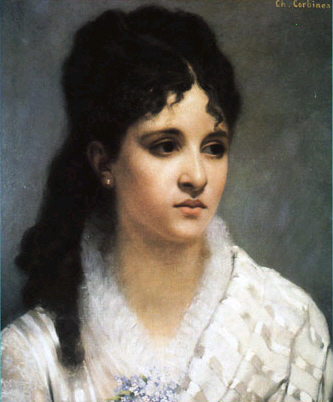
Portrait of French composer Mel Bonis (1858–1937)
Mel Bonis (1858–1937) | A Forgotten French Female Composer and the Music Hidden Behind a Name

Portrait of French composer Mel Bonis (1858–1937)

Women Behind the Score Series 1. Mel Bonis (1858–1937) | A Forgotten French Female Composer and the Music Hidden Behind a Name 2. Mel Bonis and Fauré | A 50-Year Musical Friendship Born in Room 7 of the Paris Conservatoire 3. Coming Soon   In the history of French music, the name Mel Bonis (1858–1937) … Read more

Chopin and George Sand
Chopin and George Sand | A Cruel Exile Called Sanctuary

Chopin and George Sand

Chopin and George Sand remains one of the most complex and emotionally charged relationships in the history of Romantic music.   1. Chopin and George Sand: The Cross-Dressed Woman and the Frail Pianist Image Source: Portrait of Frédéric Chopin and George Sand – Oil on canvas, 2008, based on Eugène Delacroix’s c.1837 preliminary sketch. Collection of … Read more

Beethoven Spring Sonata (Violin Sonata No. 5, Op. 24)
Beethoven Spring Sonata (Violin Sonata No. 5, Op. 24) | The Dialogue of Two Instruments Blossoming Within Classical Form

Beethoven Spring Sonata (Violin Sonata No. 5, Op. 24)

1. From Grand Orchestral Sound to Chamber Music: A Shift in Musical Perspective Recent explorations of the orchestration of Bruckner, Mahler, and Richard Strauss examined the massive sonic structures created by clustered brass sonorities. After stepping away for a moment from the vast sonic waves formed by countless instruments intertwining, we now turn our attention … Read more

Illustration of The Clustered Sound of Horns in an orchestral setting, highlighting the harmonic blocks, dynamic divisions, and dense layering characteristic of Bruckner, Mahler, and Richard Strauss.
The Clustered Sound of Horns | A Comparison of Organizational Methods in Bruckner, Mahler, and Strauss

Illustration of The Clustered Sound of Horns in an orchestral setting, highlighting the harmonic blocks, dynamic divisions, and dense layering characteristic of Bruckner, Mahler, and Richard Strauss.

1. Introduction – How the Clustered Sound of Horns Expanded In the late 19th century, as the double horn became a standard fixture, orchestrations featuring four or more horns became commonplace. 4 became the standard, and by the Late Romantic period, it expanded to 6 or 8 depending on the work. From this point forward, … Read more

error: This content is protected. Copying or selection is disabled.