

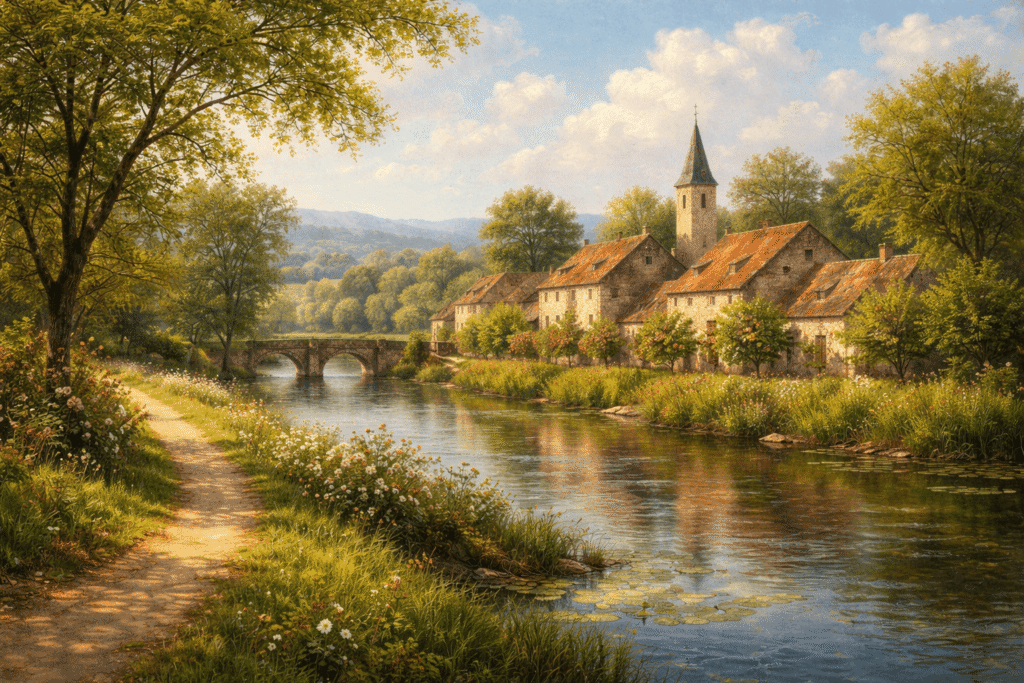
On Hearing the First Cuckoo in Spring is a tone poem composed by Frederick Delius in 1912, and first performed in Leipzig on 23 October 1913. The work forms the first of Two Pieces for Small Orchestra, the second being Summer Night on the River. Although conceived as a paired set, the two pieces have long been performed and recorded as independent works.
Despite this relatively modest background and scale, On Hearing the First Cuckoo in Spring has consistently raised questions among listeners. When hearing the piece, it is not immediately clear whether it should be approached as an example of musical Impressionism, or as a tone poem closer to early twentieth-century modern music.
The work clearly possesses a tonal centre and recognizable melodic material, yet it offers little in the way of traditional development or dramatic progression. The harmony remains blurred, the pulse relaxed, and the music shows no strong intention to move decisively toward a goal. At the same time, it avoids the fragmentation or tension often associated with later modernist language.
This ambiguous state is what repeatedly prompts the question: what kind of music is this?
Rather than attempting to assign the work to a specific musical category, this article focuses on why such questions arise in the first place. In particular, it considers how On Hearing the First Cuckoo in Spring comes to rest between Impressionism and modern music, and how this position reflects the broader musical temperament of Frederick Delius himself.
Frederick Delius (1862–1934)
“A composer who sought to listen to time within the flow of nature”
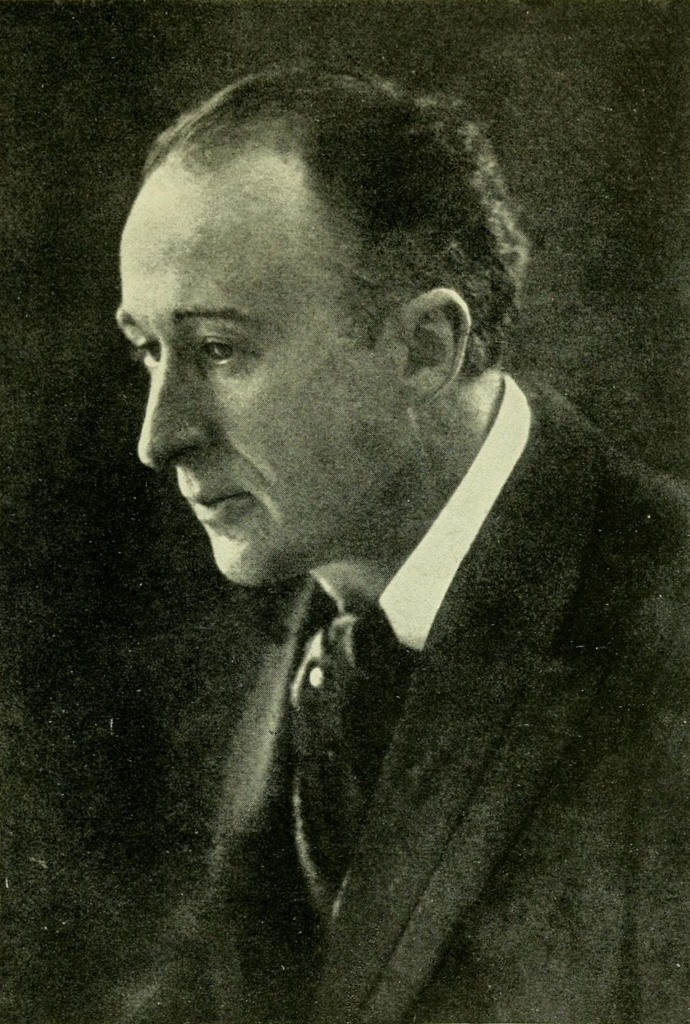
Image source: Frederick Delius (1862–1934) – photograph, c.1907. Originally published in Monographien Moderner Musiker, Vol. 2 (Leipzig, 1907). Public domain.
Nationality: British
Active period: Late 19th to early 20th century, primarily in Britain, Germany, and France
Main genres: Orchestral music, choral works with orchestral character, chamber music, songs
Characteristics: Emphasis on the flow of sound over strict formal structure; relaxed harmonic progressions; a focus on the emotional impressions of nature, sensation, and time
Frederick Delius (1862–1934) was a composer born in England. He grew up in a family engaged in commercial business and did not originally plan a career in music. In his youth, he spent time running an orange plantation in Florida, and it is said that during this period he was deeply influenced by African American spirituals and the sounds of nature.
He later moved to Leipzig, Germany, to study composition in earnest, and subsequently lived and worked between France and Germany. In the later part of his life, he settled in a rural area of northern France, composing in relative isolation. He was not closely connected to the center of the British musical establishment, nor to the dominant European musical movements of his time.
Although Delius lived during the late Romantic period, he did not prioritize large-scale forms or dramatic narratives. He composed in a wide range of genres, including opera, orchestral works, choral music, and chamber music, yet his works are generally characterized by slow movement and gradual change. Rather than basing his music on nationalism or a rigid theoretical system, he continued his musical activity in an independent manner.
In his later years, despite severe health problems that led to the loss of his sight and physical mobility, he continued composing with the help of others. Both during his lifetime and after his death, Frederick Delius has remained a composer who resists easy categorization, and today he is frequently cited as an important figure in understanding the flow of music after Romanticism.
Music Closer to Lingering Time than to Form
Although Delius lived in the late Romantic era, he did not place emphasis on formal completion or dramatic progression. His music is closer to sustaining an already existing state than to moving toward a goal. More than change or contrast, the duration in which sound remains is treated as the central element.
This attitude appears consistently throughout his works. Melodies clearly exist but do not demand development, and harmonies proceed loosely without a clear directional goal. The music does not build emotion or construct a narrative, but remains in place as a state of being.
On Hearing the First Cuckoo in Spring is a work in which this musical attitude emerges naturally. In this piece, Delius does not attempt to depict nature or explain a scene. Instead, he leaves intact the quiet moment in which time passes within nature, and simply observes it within the music.
A Structure Based on Placement Rather Than Development
On Hearing the First Cuckoo in Spring begins quietly with a slow, three-bar sequence. This opening does not suggest a direction or a narrative, but instead draws the music into an already established state. The first theme imitates the call of the cuckoo: it is introduced by the oboe and then taken up in divided strings. Rather than being developed or transformed, this theme returns throughout the piece as a recurring marker.
The second theme is given to the first violins and is derived from the Norwegian folk song In Ola Valley. This melody was introduced to Frederick Delius by the Australian composer and folk-song arranger Percy Grainger, and the same tune also appears in Edvard Grieg’s 19 Norwegian Folk Songs, Op. 66. Yet this theme, too, avoids creating contrast or forward momentum in a traditional sense. Like the first theme, it remains gently embedded within the musical flow.
Toward the end of the piece, the clarinet reintroduces the cuckoo call, after which the music fades away in a pastoral atmosphere. Rather than providing resolution or releasing tension, this ending preserves the state established at the outset and allows the piece to close without emphasis. In this way, the structure of the work clearly reveals a music oriented toward duration rather than progression, and toward remaining rather than changing.
Questions Arising Between Impressionism and Modern Music
Many listeners find themselves asking similar questions about On Hearing the First Cuckoo in Spring. Is this music Impressionist, or is it closer to modern music. From the moment it is heard, the piece resists being placed neatly into any single category.
The harmonies are blurred, the melodies are indistinct, and the meter is relaxed. These characteristics can make the music sound Impressionistic. However, unlike the works of Debussy or Ravel, there is little sense of capturing fleeting colors or momentary impressions. The music does not emphasize scenes, nor does it accumulate impressions.
At the same time, the piece may evoke modern music, yet it clearly differs from the radical language that emerged after Schoenberg. Dissonance is not aggressive, and structure is not dismantled. The music maintains a quiet state without demanding tension or interpretation from the listener.
The reason this piece continues to provoke questions is that its ambiguity is not a sign of incompletion, but a consequence of Delius’s fundamental musical attitude.
Conclusion: Music of Quietly Remaining Time
On Hearing the First Cuckoo in Spring is not a work that seeks to explain something or present a conclusion. The reason it continues to leave questions behind is that the music never assumes it must move toward a destination.
In this piece, Delius does not depict nature or heighten emotion. He leaves intact the duration in which sound lingers, the moment in which little changes. The music does not construct scenes, nor does it demand interpretation. It simply leaves behind the sense that a stretch of time has quietly passed.
For this reason, the work remains not as a vehicle for meaning, but as music that sustains a single state. On Hearing the First Cuckoo in Spring is one of the clearest expressions of how Delius approached time through music.
Further Reading
Bach Cello Suites (BWV 1007–1012) | Six Worlds Shaped by a Single Instrument’s Melody
Bach Cello Suites (BWV 1007–1012) | Six Worlds Shaped by a Single Instrument’s Melody
Debussy Arabesque No.1 | Music Between Silence and Light